
 Image 1 of 1
The recording is about 42 minutes long, read by the author.
What if the problem with elections isn’t fraud, voter ID, redistricting, campaign money, or who gets elected?
What if the problem is elections themselves?
We’re told that elections give us representative government. But does someone you didn’t choose, can’t easily replace, and fundamentally disagree with actually represent you? And does a majority vote somehow turn coercion into consent?
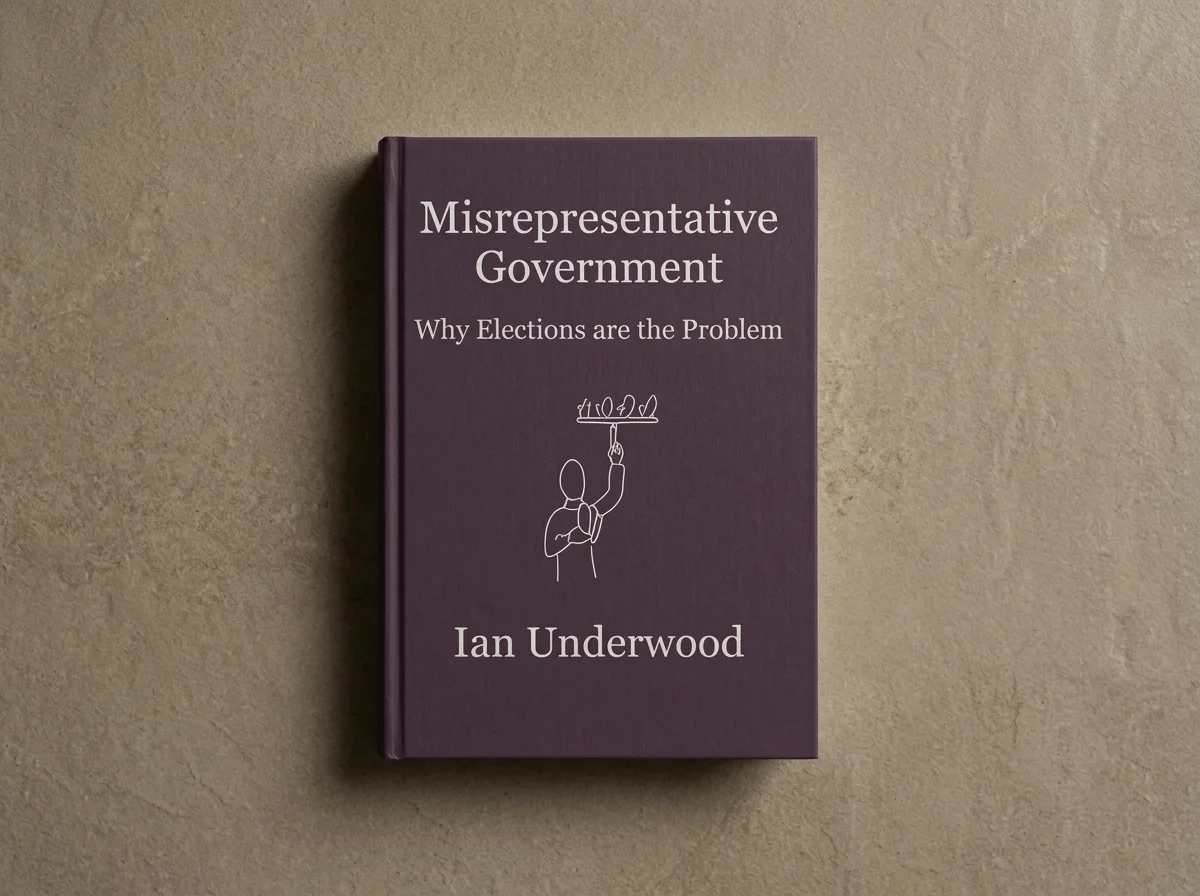
In Misrepresentative Government: Why Elections Are the Problem, Ian Underwood challenges assumptions about democracy and representation that most of us rarely stop to question.
Elections made sense in a world where travel was slow, communication was difficult, and sending someone away to make decisions on your behalf was often the only practical option. But those constraints are gone. Why are we still governing ourselves as though they aren’t?